
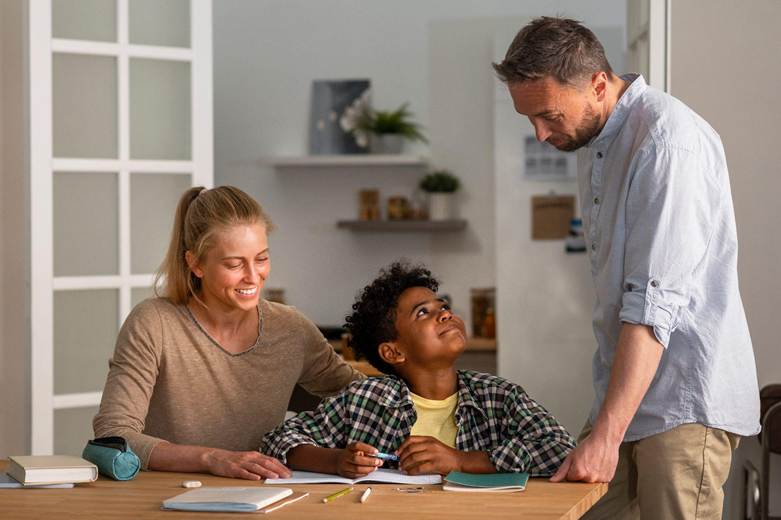
When families research reviews of Alpine Academy, they may encounter descriptions of academics, therapy, residential care, and student activities. Understanding how these pieces work together is more useful than evaluating any single service in isolation. For students who need substantial support, the environment in which learning and treatment occur can influence how effectively new skills become part of everyday life.
A residential therapeutic school has an unusual challenge. It must provide education while also helping students develop emotional, interpersonal, and practical skills that extend beyond the classroom. A student may understand a strategy during an individual therapy session but struggle to apply that strategy during a disagreement with a peer, a difficult assignment, or an ordinary household responsibility.
That is where a family-style residential model can become particularly meaningful.
Turning Therapeutic Skills Into Everyday Skills
Traditional clinical settings often separate treatment from daily life. A student attends an appointment, discusses a concern, practices a strategy, and then returns to the environment where the behavior actually needs to change.
A residential educational setting can create more opportunities to connect those pieces.
Daily routines provide repeated situations in which students can practice skills such as:
- Communicating needs appropriately
- Managing frustration
- Solving problems with peers
- Following routines independently
- Accepting constructive feedback
- Taking responsibility for personal choices
- Building healthier patterns of interaction
The objective is not simply to teach a student what to do. It is to create opportunities to practice those behaviors until they become increasingly usable in ordinary situations.
Why Consistency Matters
Consistency is particularly important when students are working on behavioral or emotional skills.
If expectations change dramatically from one environment to another, students may have difficulty understanding which behaviors are expected and how to apply what they have learned. A structured residential model can provide continuity between school, therapy, recreation, and home-style living.
At Alpine Academy, the residential model is organized around family-style homes rather than a traditional institutional environment. Students live in smaller groups with around-the-clock staff support, creating a setting in which daily routines become part of the broader educational and therapeutic experience.
That structure can make ordinary activities clinically relevant without turning every moment into a therapy session.
Preparing a meal, completing a household responsibility, resolving a disagreement, participating in recreation, or managing a schedule can all become opportunities to practice independence.
The Teaching Family Model and Skill Development
The Teaching Family Model is designed around the idea that everyday interactions can become opportunities for teaching and reinforcing positive behaviors.
This approach is different from simply providing supervision.
Supervision primarily focuses on whether a student is following expectations. A teaching-oriented environment asks what the student can learn from the situation and how that learning can be applied later.
For example, a conflict between students might involve more than determining who was right or wrong. The situation could provide an opportunity to work on communication, emotional regulation, perspective-taking, accountability, and repairing relationships.
The emphasis is therefore on building transferable skills rather than simply resolving individual incidents.
Family Involvement Extends the Learning Environment
Residential treatment does not mean families become disconnected from the process.
Family participation can be important because the ultimate goal of therapeutic education is not to create a student who functions only within a highly structured campus. The goal is to help students develop skills that can continue to be used after returning home.
Regular family involvement can help connect therapeutic goals with the relationships and expectations students will encounter outside the program.
This may involve working on:
- Communication patterns
- Family expectations
- Conflict resolution
- Boundaries
- Emotional support
- Consistent responses to challenges
- Preparation for transition home
When families understand the strategies being practiced, they may be better positioned to reinforce those skills after treatment.
Academics Should Remain Part of the Picture
Therapeutic support should not require students to put their education on indefinite hold.
A comprehensive program can address academic progress alongside emotional and behavioral development. Alpine Academy operates two accredited non-public high schools and provides core and elective courses, special education services, honors-level options, and academic counseling.
That combination matters because students still need to think about graduation, future education, career interests, and increasing independence.
A therapeutic environment that ignores those goals may address an immediate challenge while leaving another major source of stress unresolved.
More Instructional Time Can Support Continuity
Academic continuity can also be important for students whose treatment needs have disrupted traditional schooling.
Alpine Academy’s 210 instructional-day calendar provides more scheduled instructional time than a conventional 180-day school year. The additional days do not simply represent more classroom hours. They can provide additional opportunities to maintain academic progress while therapeutic work continues.
For a student who has struggled academically because of emotional, behavioral, or other challenges, maintaining educational momentum can be an important part of the larger recovery process.
Independence Requires Practice
One of the most important questions in therapeutic education is what happens after graduation.
Students eventually need to navigate environments with less supervision. They may enter college, vocational programs, employment, or other settings where adults are not continuously available to structure every decision.
A residential program can therefore use everyday responsibilities as preparation for that transition.
This is where increasing independence becomes different from simply giving students more freedom. Independence involves developing the ability to make decisions, manage responsibilities, respond to setbacks, and seek assistance appropriately.
Programs such as Alpine Academy’s ASPIRE model are designed for students approaching graduation and can provide additional responsibility as students prepare for greater independence.
Recreation Can Also Support Development
Therapeutic education does not have to happen exclusively through classrooms and counseling offices.
Physical activity, recreation, and structured extracurricular experiences can create additional opportunities for students to practice cooperation, persistence, confidence, and self-management.
Alpine Academy provides recreational facilities as well as indoor and outdoor riding arenas that can support both recreation and equine therapy. These environments give students opportunities to participate in activities that require attention, responsibility, and engagement with others.
The value of such activities is not simply that they make a residential program more enjoyable. They can broaden the settings in which students practice the skills they are developing.
Preparing for Life Beyond the Campus
The strongest residential educational models ultimately have to answer a question that extends beyond the length of enrollment: how will students use these skills later?
That makes transition planning important.
Academic preparation, family involvement, therapeutic support, increasing responsibility, and aftercare can all contribute to a more gradual transition. Alpine Academy’s aftercare program provides therapeutic resources and guidance for one year following graduation at no additional charge.
This type of continued support recognizes that progress does not automatically stop being relevant when a student leaves campus.
Looking at the Whole Environment
Families evaluating therapeutic schools may naturally focus on individual features. They may ask about academics, therapy, residential arrangements, accreditation, recreation, or transition services.
Those questions are important, but the more revealing question may be how those elements interact.
A family-style residential environment can provide a setting where academic learning, therapeutic strategies, relationships, recreation, and practical responsibilities overlap. Instead of treating education and treatment as separate tracks, the model can create repeated opportunities for students to apply what they are learning in real-life situations.
For families exploring therapeutic education, that integrated structure is worth understanding. The quality of a program is not defined only by what happens during a therapy appointment or inside a classroom. It can also depend on whether the surrounding environment gives students meaningful opportunities to practice, adapt, and eventually carry those skills into life beyond the program.
